Monopotassium Dipotassium Tripotassium Phosphate or Potassium Phosphate Monobasic Dibasic Tribasic Manufacturers |
Supplier, Manufacturer, Exporter of Monopotassium Dipotassium Tripotassium Phosphate or Potassium Phosphate Monobasic Dibasic Tribasic, Muby Chemicals of Mubychem Group, established in 1976, is the original manufacturers of Specialty Chemicals, Pharmaceutical Excipient, Fragrance Food & Flavor chemicals, Reagent Grade Chemicals, Shale Gas Fracturing Chemicals in India. Mubychem Group has several manufacturing facilities spread across Western India and world wide contacts and toll manufacturers. We are exporting globally to countries like USA, Canada, Europe, UAE, South Africa, Tanzania, Kenya, Egypt, Nigeria, Cameroon, Uganda, Turkey, Mexico, Brazil, Chile, Argentina, Dubai, Korea, Vietnam, Thailand, Malaysia, Indonesia, Australia, China, Germany, France, Italy Portugal, Bangladesh, etc. The products are offered as per required specifications and in correct shape and size in mm or meshs or microns as specified by the buyer. The participating units have one or more accreditations like FDA - cGMP and GLP approval, ISO-9001 Certified, "REACH" Registered, ISO-14001, ISO/IEC 17025, ISO-22000, FSSC 22000, ISO 45001, Kosher Certified, Halal Certified, HACCP, FSSAI. We offer Commercial Pure & IP BP EP Ph Eur USP NF JP FCC Food Grade Analytical Reagent Grades of Chemicals |
| Bookmark this Web Site -- or -- Email This Page Info to a Colleague or Yourself |







Search our website here:
 ---------







Monobasic Potassium Phosphate CAS Number 7778-77-0, EINECS EC Number 231-913-4, HS Code 283524**, Molecular Weight 136, Chemical Formula: KH2PO4
Dibasic Potassium Phosphate CAS Number 7758-11-4, EINECS EC Number 231-834-5, HS Code 283524**, Molecular Weight 174, Chemical Formula: K2HPO4
Tribasic Potassium Phosphate CAS Number 7778-53-2, EINECS EC Number 231-907-1, HS Code 283524**, Molecular Weight 212, Chemical Formula: K3PO4
How big is your requirement or how small
We serve it all.
Specifications, Safety Data Sheet, Manufacturing process details, Wholesale retail buy sell prices, Uses
etc available on line in these pages for Monopotassium Dipotassium Tripotassium Potassium Phosphate or Potassium Phosphate Monobasic Dibasic Tribasic.
Potassium Phosphates Commercial grade
Potassium Phosphate USP BP IP FCC Analytical Reagent Food Grade Manufacturers
Dibasic Potassium Phosphate Dibasic Manufacturers BP USP NF Dipotassium Phosphate Manufacturers
Tribasic Potassium Phosphate Tribasic Manufacturers BP USP NF Tripotassium Phosphate Manufacturers
Buy Monopotassium Phosphate; Door Delivery
MSDS of Monobasic Potassium Phosphate BP USP NF IP Analytical Reagent FCC Food Grade Manufacturers
Buy Dipotassium Phosphate; Door Delivery
MSDS of Dibasic Potassium Phosphate IP BP USP NF Analytical Reagent FCC Food Grade Manufacturers
Buy Tripotassium Phosphate; Door Delivery
MSDS of Tribasic Potassium Phosphate IP BP USP Analytical Reagent FCC Food Grade Manufacturers
Mono Di Tri Potassium Phosphate
Technical & Pure Crystals
Also IP BP Ph. Eur. USP Analytical Reagent FCC Food Grades Suppliers
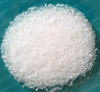
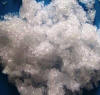
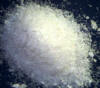
Potassium Phosphate Offered in two grades namely Technical Grade and Extra Pure BP IP USP FCC Analytical Reagent Grade.
Monobasic Potassium Phosphate Monobasic
For MSDS Sheet Click MSDS Monobasic Potassium Phosphate Monobasic
Mono Potassium Phosphate Specifications
Appearance: Fine White Crystals
Purity: 98% min
P2O5 Content: 51.5% min
Chloride: 0.15% max
Heavy Metals: 20 ppm max
Arsenic: 3 ppm max
Moisture: 3% max
Insoluble: 0.1% max
Mono potassium phosphate MKP (also potassium dihydrogen phosphate, KDP, or monobasic potassium phosphate, MKP or potassium phosphate monobasic) -- KH2PO4 -- is a soluble salt which is used as a fertilizer, a food additive and a fungicide. Mono potassium phosphate is a source of phosphorus and potassium. Mono potassium phosphate is also a buffering agent. When used in fertilizer mixtures with urea and ammonium phosphates, Mono potassium phosphate minimizes escape of ammonia by keeping the pH at a relatively low level.
Potassium Phosphate - Monobasic: Potassium biphosphate or acid phosphate; potassium dihydrogen phosphate; mono potassium phosphate. KH2PO4; mol. wt. 136.09. Colorless crystals or white, granular powder; permanent in air; at 400° loses H2O, forming metaphosphate. d. 2.34. Soluble in about 4.5 parts water; insoluble in alcohol. pH: 4.4-4.7.
Use: In buffers for determination of pH.
MKP is used to prevent calcium kidney stones. It is also used to decrease the amount of ammonia in urine, thereby reducing odor and skin irritation caused by high-ammonia urine. This medication is also given to help certain antibiotics for bladder infections (e.g., methenamine) work better.
Fertilizer grade MKP contains the equivalent of 52% P2O5 and 34% K2O, and is labeled 0-52-34. MKP is often used as a nutrient source in the greenhouse trade and in hydroponics.
MKP is one of the components of Gatorade and is used as an additive in cigarettes.
At 400C it decomposes, by loss of water, to potassium metaphosphate (KPO3)
As a crystal, MKP is noted for its non-linear optical properties. Used in optical modulators and for non-linear optics such as SHG (second harmonic generation).
Also to be noted is KDP, Potassium Dideuterium Phosphate, with slightly different properties. Highly deuterated KDP is used in nonlinear frequency conversion of laser light instead of protonated (regular) KDP due to the fact that the replacement of protons with deuterons in the crystal shifts the third overtone of the strong OH molecular stretch to longer wavelengths, moving it mostly out of the range of the fundamental line at ~1,064nm of neodymium based lasers. Regular KDP has absorbance at this wavelength of around 4.7-6.3%/cm of thickness while highly deuterated KDP has absorbance's of typically less than .8%/cm.
Dibasic Potassium Phosphate Dibasic
For MSDS Sheet Click MSDS Dibasic Potassium Phosphate Dibasic
Di Potassium Phosphate Specifications
Appearance: Fine White Crystals
Purity: 96% min
pH 1%: 8.7 - 9.3
Sulphate: 0.02% max
Heavy Metals: 10 ppm max
Arsenic: 4 ppm max
Moisture: 5% max
Insoluble: 0.1% max
Di potassium phosphate DKP (K2HPO4) i.e. dipotassium phosphate or potassium phosphate dibasic- also phosphoric acid, di potassium salt; di potassium hydrogen orthophosphate; potassium phosphate dibasic - is a highly water-soluble salt which is often used as a fertilizer, food additive and buffering agent. DKP is a common source of phosphorus and potassium.
Di potassium hydrogen phosphate. K2HPO4; mol. wt 174.18. White, somewhat hygroscopic granules. Very soluble in water, slightly in alcohol. Converted into pyrophosphate by ignition. The aq. solution. is slightly alkaline to phenolphthalein.
As a food additive, DKP is on the FDA's Generally recognized as safe, or GRAS, list of substances. It is used in non-dairy creamers to prevent coagulation. It is sometimes sold as a food additive to help with headaches.
Tribasic Potassium Phosphate Tribasic
For MSDS Sheet Click MSDS Tribasic Potassium Phosphate Tribasic
Tri potassium phosphate TKP TPP i.e. tripotassium phosphate or potassium phosphate tribasic is a water-soluble ionic salt which has the chemical formula K3PO4. It is used as a food additive for its properties as an emulsifier, foaming agent and whipping agent. In combination with fatty acids, it is a potential antimicrobial agent in poultry processing. As a fertilizer, its proportions of N, P2O5, and K2O are 0-33-67, making it one of the few fertilizer compounds in which the nutrient percentages have a total of 100%.
TKP K3PO4; mol. wt. 212.27. Usually contains about one mol. H2O (9%) and small amount of carbonate. White, deliquesce, granular powder. m. 1340°. Very soluble in water; insoluble in alcohol. The aq. solution. is strongly alkaline. Keep well closed.
We manufacture and supply as under:
Sitagliptin Phosphate Monohydrate.
We also manufacture and supply as under:
Sodium Hexametaphosphate or Sodium Polyphosphate
Manufacturers:
MUBY CHEMICALS
Ambernath Mumbai, Ankleshwar Gujarat, India
TEL: (OFFICE) +91-22-65290100, +91-22-65290101
Current Date Time in India GMT+5:30
e-mail: info@mubychem.com
USA, Canada, Mexico and other American neighbouring buyers may
e-mail: us@mubychem.com
Call toll-free 1-877-682-9243 (1-877-MUBYCHEM)

Copyright and Usual Disclaimer is Applicable.
Last 30 April, 2026


Exporters to USA Canada UAE Europe South Africa Tanzania Kenya Uganda Egypt Nigeria Turkey Mexico Brazil Argentina Chile Dubai etc.
I shall pass through this world, but once. If therefore, there is any good that I can do, or if there is any favor that I can show to a fellow human being, let me do it now. Let me not defer or neglect it. For I shall not tread this way again