Sodium Diacetate FCC Food Grade Manufacturers |
Supplier, Manufacturer, Exporter of Sodium Diacetate FCC Food Grade, Muby Chemicals of Mubychem Group, established in 1976, is the original manufacturers of Specialty Chemicals, Pharmaceutical Excipient, Fragrance Food & Flavor chemicals, Reagent Grade Chemicals, Shale Gas Fracturing Chemicals in India. Mubychem Group has several manufacturing facilities spread across Western India and world wide contacts and toll manufacturers. We are exporting globally to countries like USA, Canada, Europe, UAE, South Africa, Tanzania, Kenya, Egypt, Nigeria, Cameroon, Uganda, Turkey, Mexico, Brazil, Chile, Argentina, Dubai, Korea, Vietnam, Thailand, Malaysia, Indonesia, Australia, China, Germany, France, Italy Portugal, Bangladesh, etc. The products are offered as per required specifications and in correct shape and size in mm or meshs or microns as specified by the buyer. The participating units have one or more accreditations like FDA - cGMP and GLP approval, ISO-9001 Certified, "REACH" Registered, ISO-14001, ISO/IEC 17025, ISO-22000, FSSC 22000, ISO 45001, Kosher Certified, Halal Certified, HACCP, FSSAI. We offer Commercial Pure & IP BP EP Ph Eur USP NF JP FCC Food Grade Analytical Reagent Grades of Chemicals |
| Bookmark this Web Site -- or -- Email This Page Info to a Colleague or Yourself |







Search our website here:
 ---------






Sodium Diacetate CAS Number 126-96-5, EINECS EC Number 204-814-9, HS Code 291529**, Chemical Formula CH3COONa*CH3COOH, Molecular Weight 142.09
How big is your requirement or how small
We serve it all.
Specifications, Safety Data Sheet, Manufacturing process details, Wholesale retail buy sell prices, Uses etc available on line in these pages for Sodium Diacetate.
Sodium Diacetate Manufacturers
Buy Sodium Diacetate; Door Delivery
MSDS of Sodium Diacetate Manufacturers
Sodium Acetate BP USP IP Analytical Reagent & Food Grade
Spanish Fabricantes de diacetato de sodio
Portuguese Fabricantes de diacetato de sódio
Sodium Diacetate
Pure & FCC Food Grades Suppliers
| Derivation | Acetic acid and the sodium salt of acetic acid |
| Formula | CH3COONa*CH3COOH |
| Molecular Weight | 142.09 |
| CAS Number | 126-96-5 |
| E/A-numbers | E262; A262 |
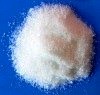
| Appearance | White crystalline powder with an acetous odor |
| Assay | Acetic Acid: 39.0 - 41.0% and Sodium Acetate: 58.0 - 60.0% |
| Moisture | 1% maximum |
| pH | 4-5 |
| Arsenic | 1 ppm maximum |
| Heavy Metals | 2 ppm maximum |
| Grades | FCC and Technical |
Sodium Diacetate FCC Food Grade:
Sodium Hydrogen Diacetate
CH3COONa-CH3COOH-xH2O
C4H7NaO4-xH2O Formula weight, anhydrous 142.09
NS: 262 CAS 126-96-5
DESCRIPTION
Sodium Diacetate occurs as a white, hygroscopic, crystalline solid. It is a molecular compound of sodium acetate and acetic acid. One gram is soluble in about 1 mL of water. The pH of a 1:10 aqueous solution is between 4.5 and 5.0.
Function: Sequestrant; preservative; antimicrobial agent; mold inhibitor.
REQUIREMENTS
Identification: A 1:10 aqueous solution gives positive tests for Acetate and for Sodium.
Assay: Not less than 39.0% and not more than 41.0% of free acetic acid (CH3COOH), and not less than 58.0% and not more than 60.0% of sodium acetate (CH3COONa), calculated on the anhydrous basis.
Lead: Not more than 2 mg/kg.
Readily Oxidizable Substances (as formic acid): Not more than 0.2%.
Water: Not more than 2.0%.
We manufacture Sodium Diacetate also called Sodium Di acetate from virgin raw material by reaction. We tailor make it to suit the grain size as specified by the buyer.
SODIUM DIACETATE (diacetato de sodio, natriumdiacetat) has long been used as a food additive. Sodium Diacetate is a free flowing, dust free and readily available source of Acetic acid , the acid familiar to the housewives. Sodium Diacetate (E262) provides a solid source of acetic acid for use in dry products.
Food industry:
SODIUM DIACETATE is a generally recognized as safe ingredient (GRAS) by the US FDA, and is also a generally permitted food additive in Europe and elsewhere. The FDA's CFR 184.1754 limits the use of SODIUM DI ACETATE to levels not to exceed current good manufacturing practices, and specifically defines the levels of the material in various food applications.
SODIUM DIACETATE, usually in combination with lactates, is widely used by the meat packing industry as an excellent anti-microbial preservative. Vinegar taste on potato chips or tacos can be achieved by adding 0.1% sodium diacetate.
We also manufacture and supply as under:
Tetrasodium Glutamate Diacetate
and many other sodium salts.
We also manufacture and supply as under:
2,7-Dichlorofluorescein Diacetate.
Manufacturers:
MUBY CHEMICALS
Ambernath Mumbai, Ankleshwar Gujarat, India
TEL: (OFFICE) +91-22-65290100, +91-22-65290101
Current Date Time in India GMT+5:30
e-mail: info@mubychem.com
USA, Canada, Mexico and other American neighbouring buyers may
e-mail: us@mubychem.com
Call toll-free 1-877-682-9243 (1-877-MUBYCHEM)
Copyright and Usual Disclaimer is Applicable.
Last 19 May, 2026


Global or International Suppliers, Exporters, Importers, Manufacturers
Exporters to USA Canada UAE Europe South Africa Tanzania Kenya Uganda Egypt Nigeria Turkey Mexico Brazil Argentina Chile Dubai etc.
I shall pass through this world, but once. If therefore, there is any good that I can do, or if there is any favor that I can show to a fellow human being, let me do it now. Let me not defer or neglect it. For I shall not tread this way again